

What’s in a name?
Not much in this case I’m afraid. I chose The Fifth Filter in part because I thought it sounded really cool and reminded me of the (now possibly defunct) brand Seventh Letter – The number/word duality (like Beethoven’s Eighth Symphony) and alliteration (like Seventh Seal, Ingmar Bergman’s movie about a chess game with Death) really does it for me. Twin Peaks gets an honourable mention in this pseudo-naming-formula.
I wasn’t the first person to put these three words together – I nabbed them from Herman and Chomsky’s article Manufacturing Consent: The Political Economy of the Mass Media, which I first encountered as a supple Communications student at the University of Technology in Sydney. In short the article illustrates how “the media serve, and propagandise on behalf of, the powerful societal interests that control and finance them.” Their theory introduces five “filters” which basically illustrate the type of editorial bias used in news reporting – the fifth filter being anti-communism and fear ideology, or in this day and age, “the War on Terror” (most recently Russia v. Ukraine, Israel v. Palestine) – Scare the s*** out of your consumers and they’ll keep putting orders through Amazon.
- Ownership: The media is often owned by large corporations, which can affect what news is reported. The interests of these owners can shape the media content to align with their own goals and values.
- Advertising: Since many media outlets make money from ads, they may avoid stories that could upset advertisers. This can lead to biased news that favors the advertisers’ interests.
- Sourcing: Media companies rely on information from government, business, and expert sources. If a media outlet wants to keep access to these sources, they might not report anything that could upset them.
- Flak: This is negative responses to a media statement or program. It could be from big corporations or government. If there’s a lot of flak, a media outlet might avoid certain topics to not get into trouble.
- Anti-Communism: This was originally about the fear of communism. Nowadays, it’s about having an enemy that the media can focus on. This filter pushes the media to frame news in terms of good guys vs. bad guys.
Making a logo
So I had the name – I just needed a logo now. I decided my logo would reflect the actual propaganda filter, heard Bing was doing a pretty good job at making logos and decided to challenge it with the following (ridiculously long) prompt:
Make me a logo (please) for a brand called ‘the Fifth Filter’ – the name is rooted in Herman and Chomsky’s propaganda model – the fifth filter being ‘fear’. The logo will be primarily used on a blog about the work I do across design and data sectors. I would like to draw inspiration from the cover art of dystopian books such as Fahrenheit 451, 1984, Brave New World and Clockwork Orange, as well as other science fiction of the time(ish*) such as Do Androids Dream of Electric Sheep, Neuromancer and and the Stars My Destination.
*If we remove Neuromancer we’re probably looking at around 30 years of science fiction starting with Brave New World and ending with Do Androids Dream of Electric Sheep?
The results
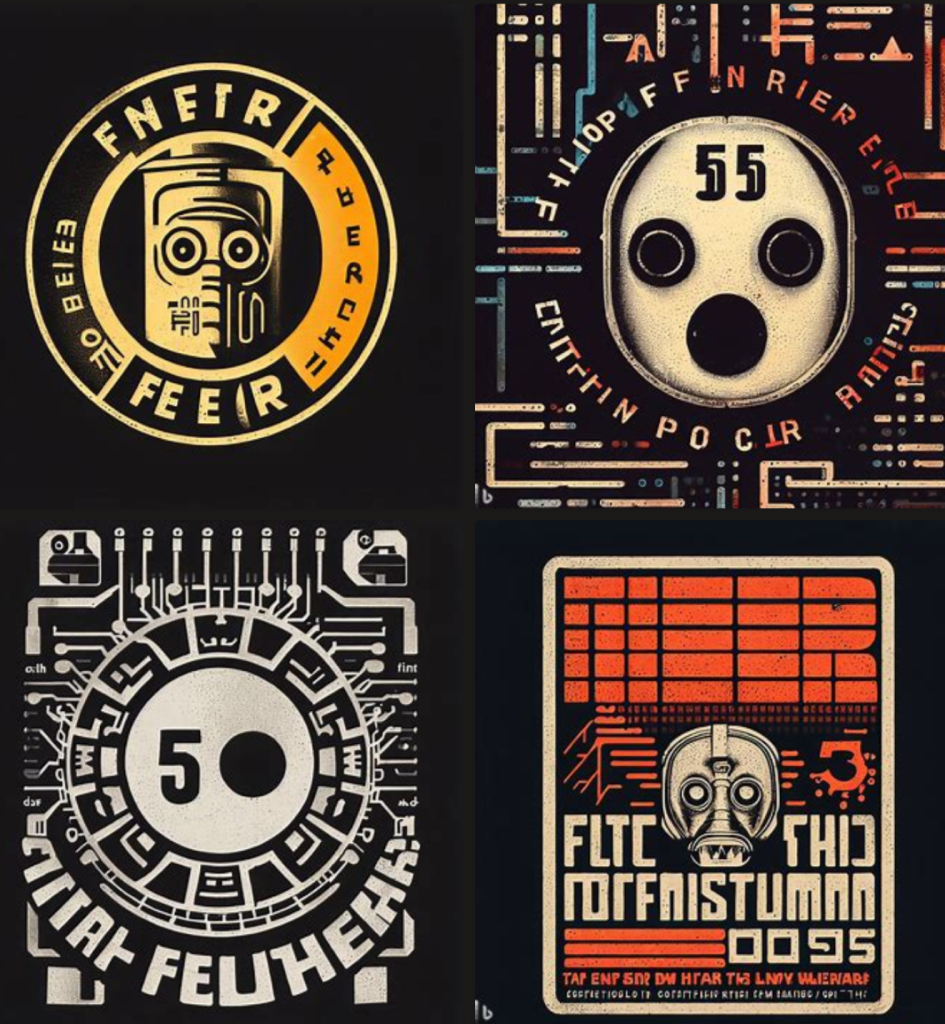
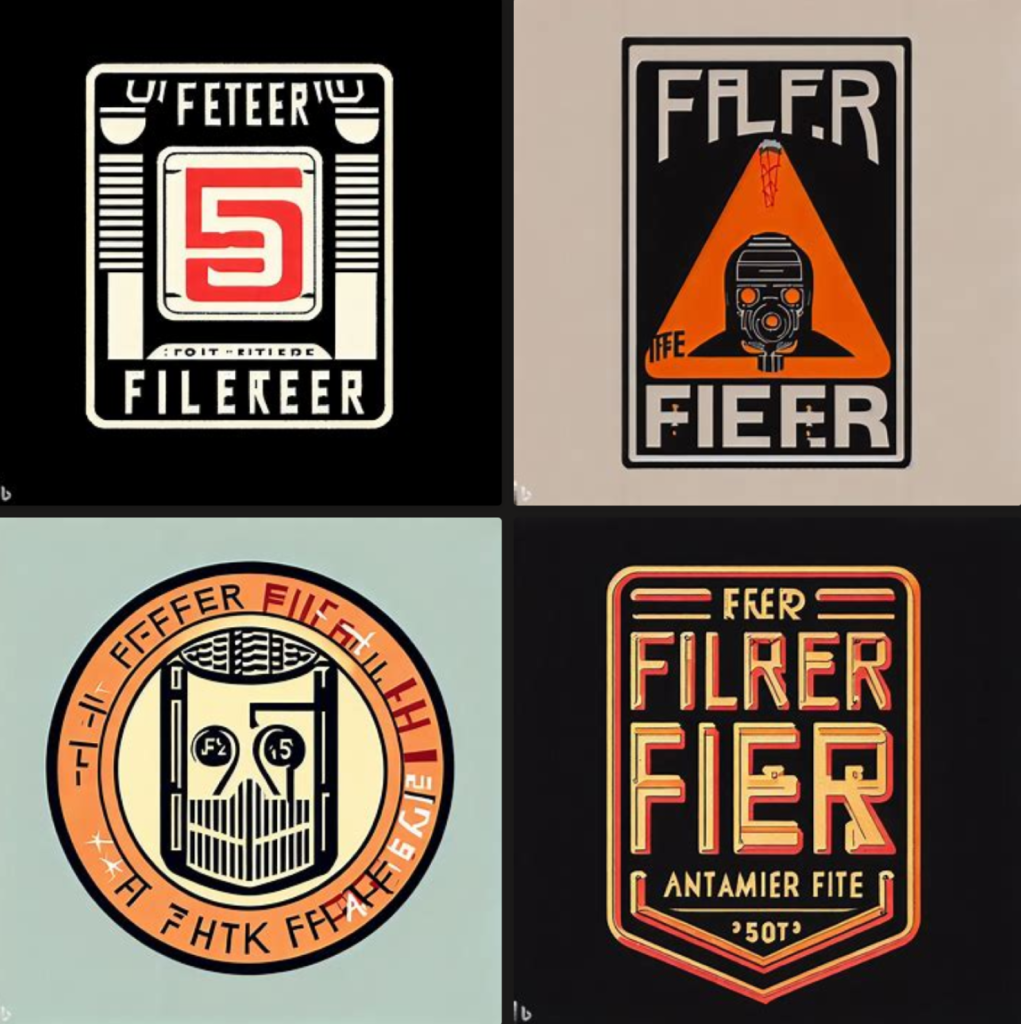
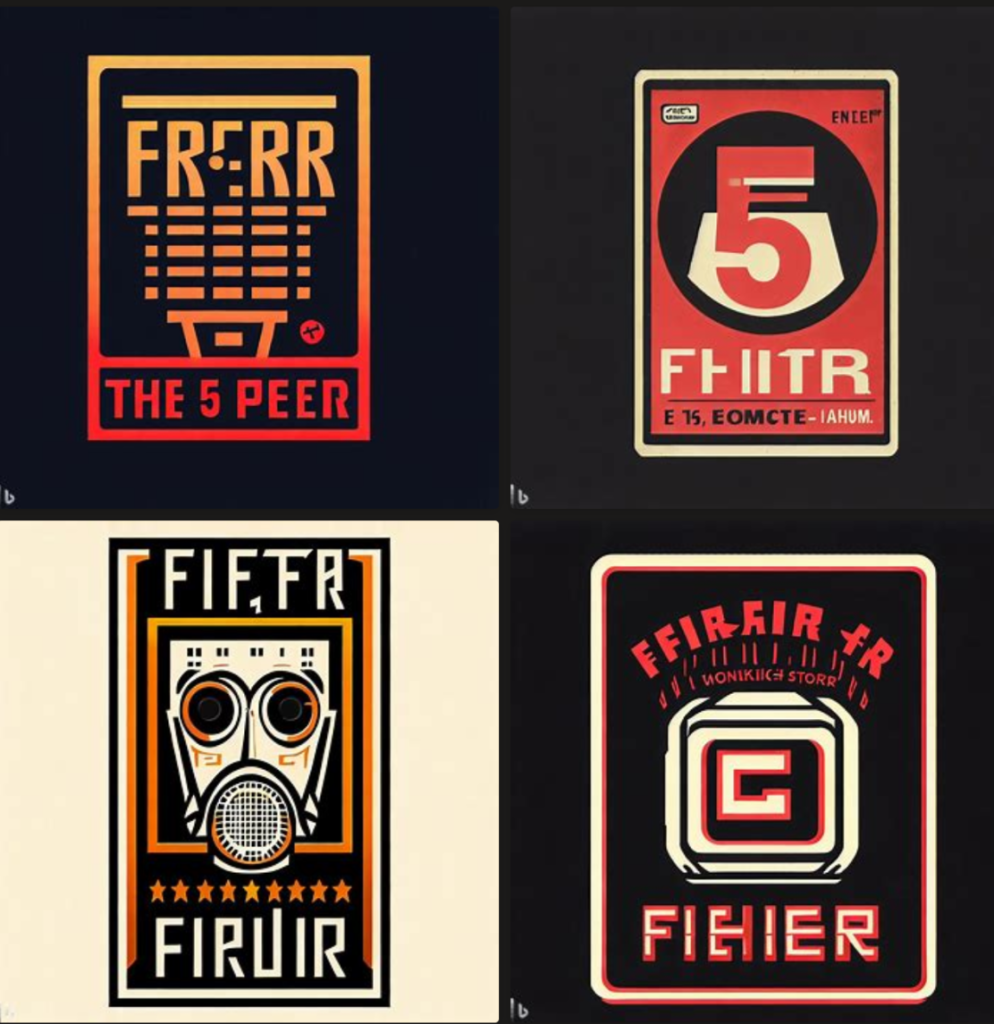
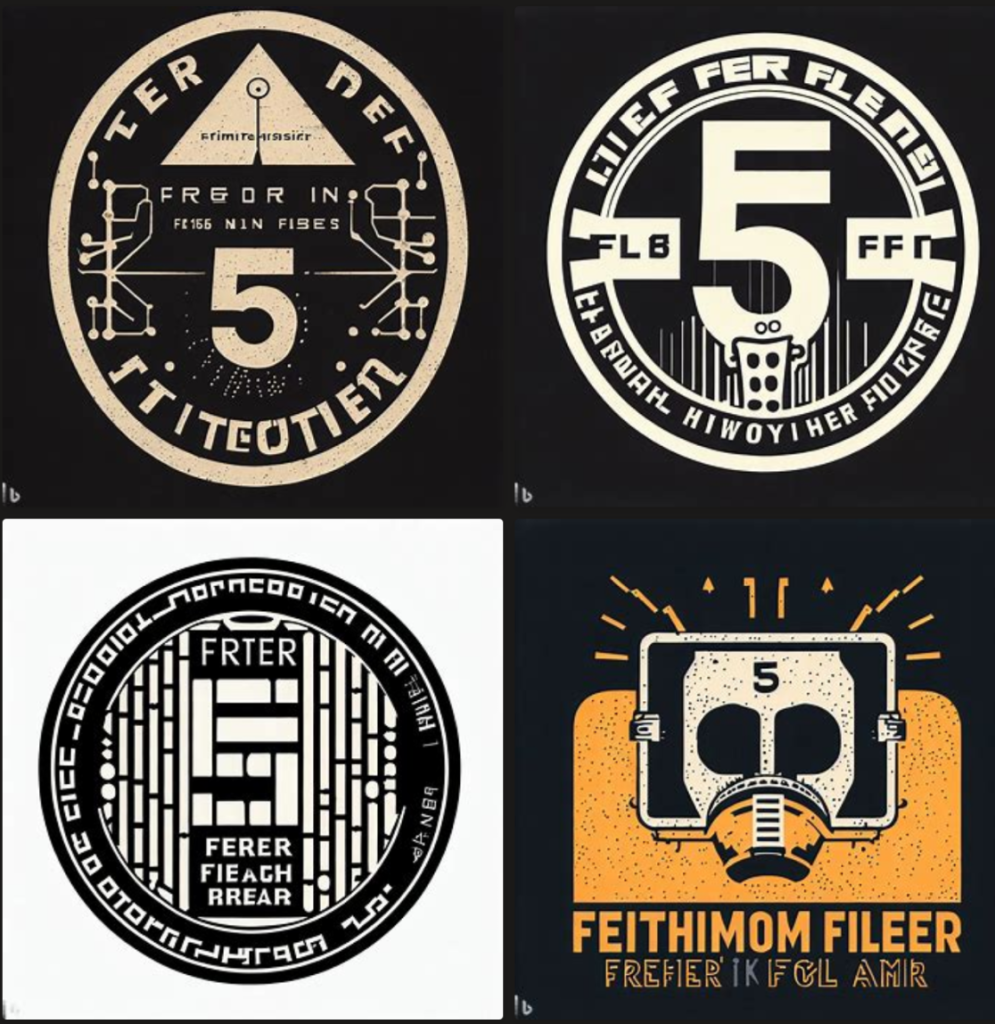
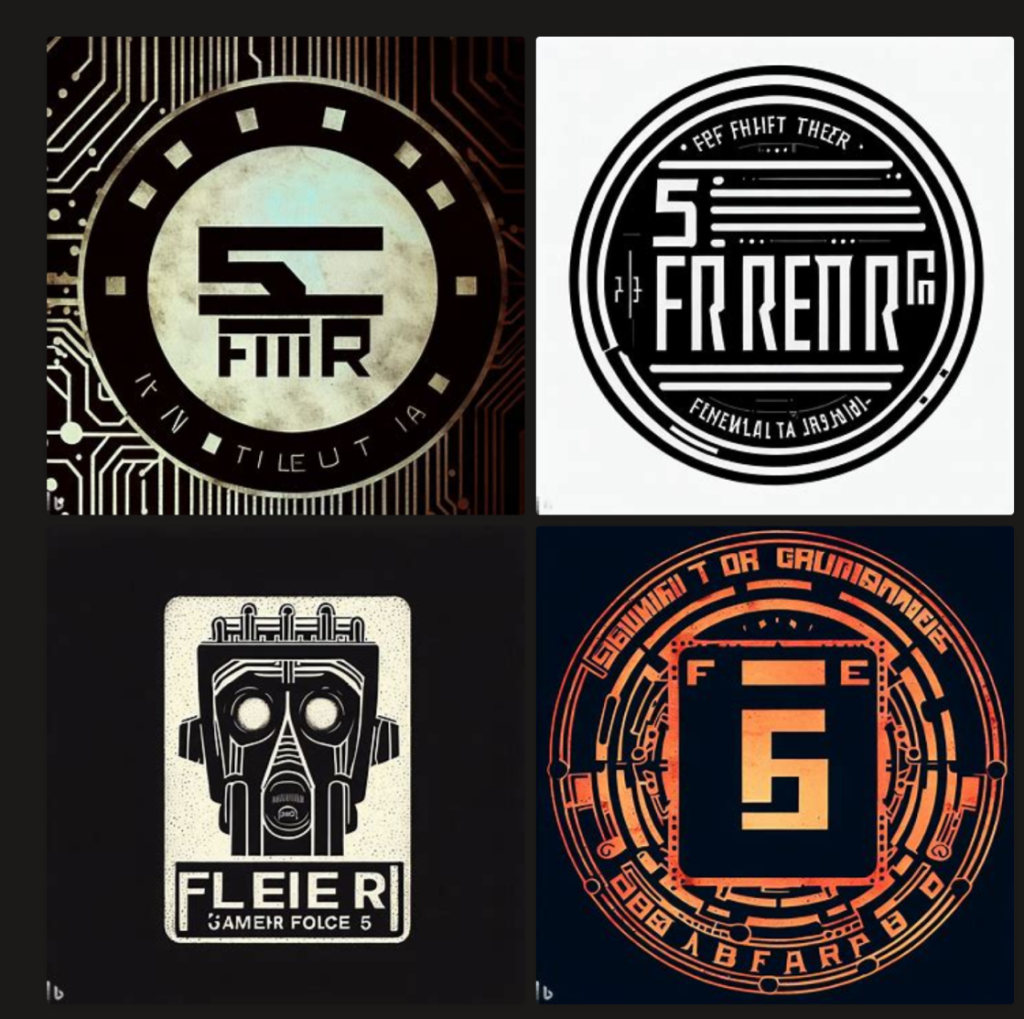
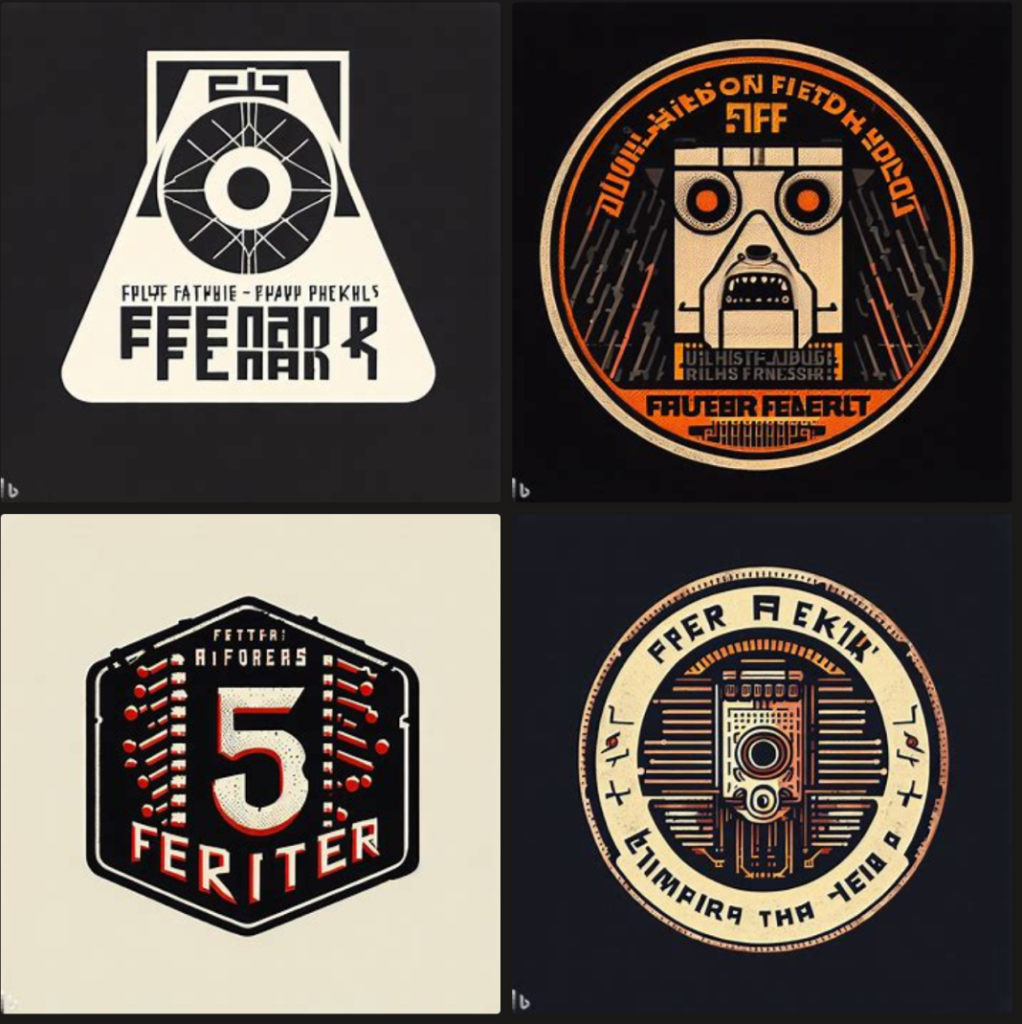
I have to admit – The results were pretty awesome. There was only one problem though – None of the text was coherent. The reason being is that apparently, currently there is no “reliable or effective way to create text. DALL·E (which is what was powering Bing) is not currently designed to produce text, but to generate realistic and artistic images based on … keywords or phrases. Right now, it does not have a specific understanding of writing, labels or any other common text and often produces distorted or unintelligible results.”
Alright then, back to the old methods. I dusted off Adobe Illustrator after getting annoyed with Figma, and using my favourite parts (the merged F5, the gas masks, the gradients etc) from the above generated images I came up with this:

It looked a bit dark and scary, but not to worry – I put it aside and started to work on the website. I threw a WordPress website together (one click install, Siteground) using the default ‘2023’ theme and ‘Sherbet’ colour palette and noticed that it added this cool effect to excerpt images in post feeds (as below):
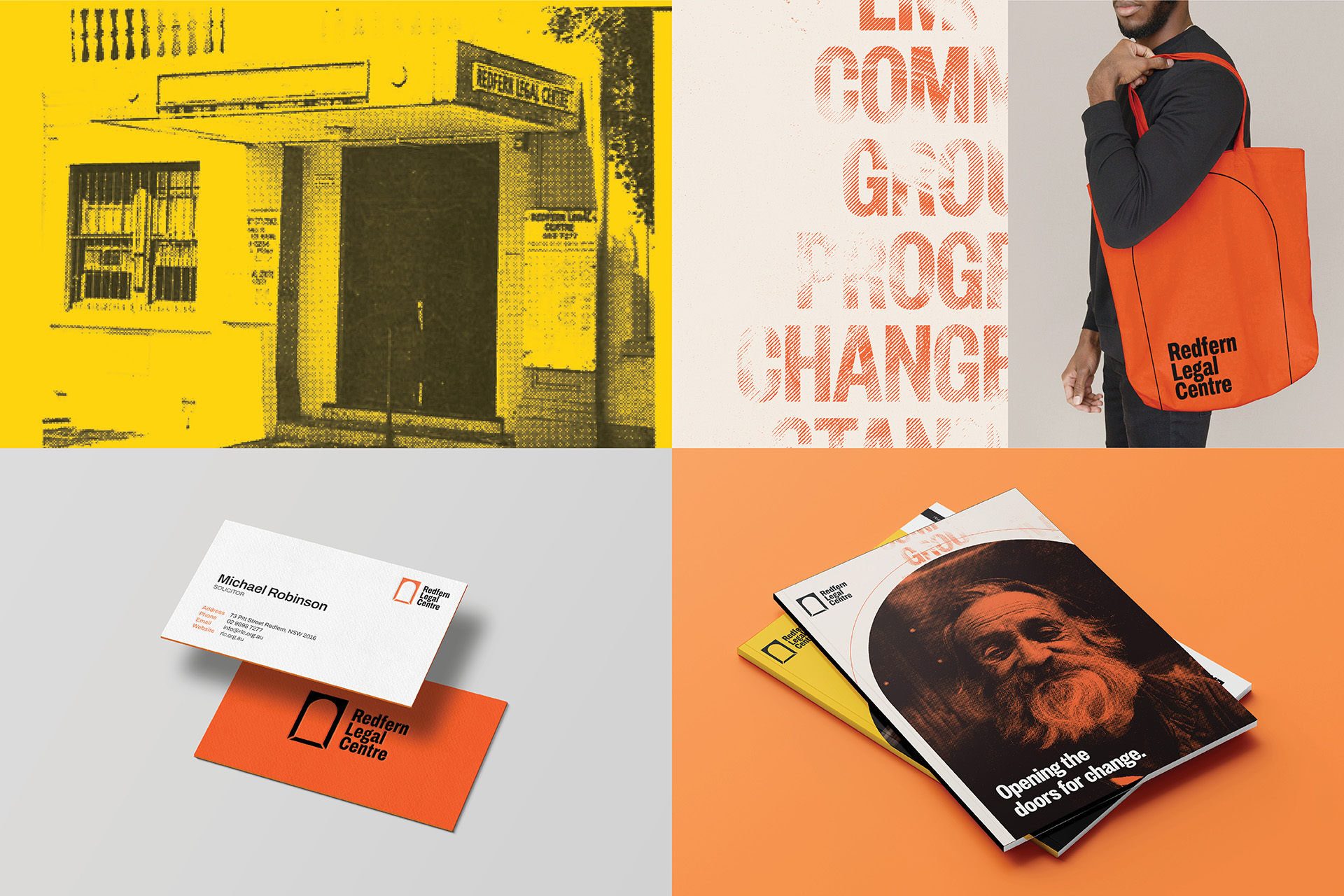
Why not just pinch the colours I thought (?!), and then I was left with this guy:

Happy accident, but no thanks to artificial intelligence really…! The only other help I got from AI was styling the category buttons on the home page (which came down to sheer laziness really)… Thanks ChatGPT!
I am looking forward to using this website to publish some old articles that I have written over the years as well as showcasing some new work.
Leave a Reply